
 By integrating an evidence-backed supplementation strategy, you can offer personalized, proactive care to those patients facing osteopenia, osteoporosis or seeking preventive strategies.
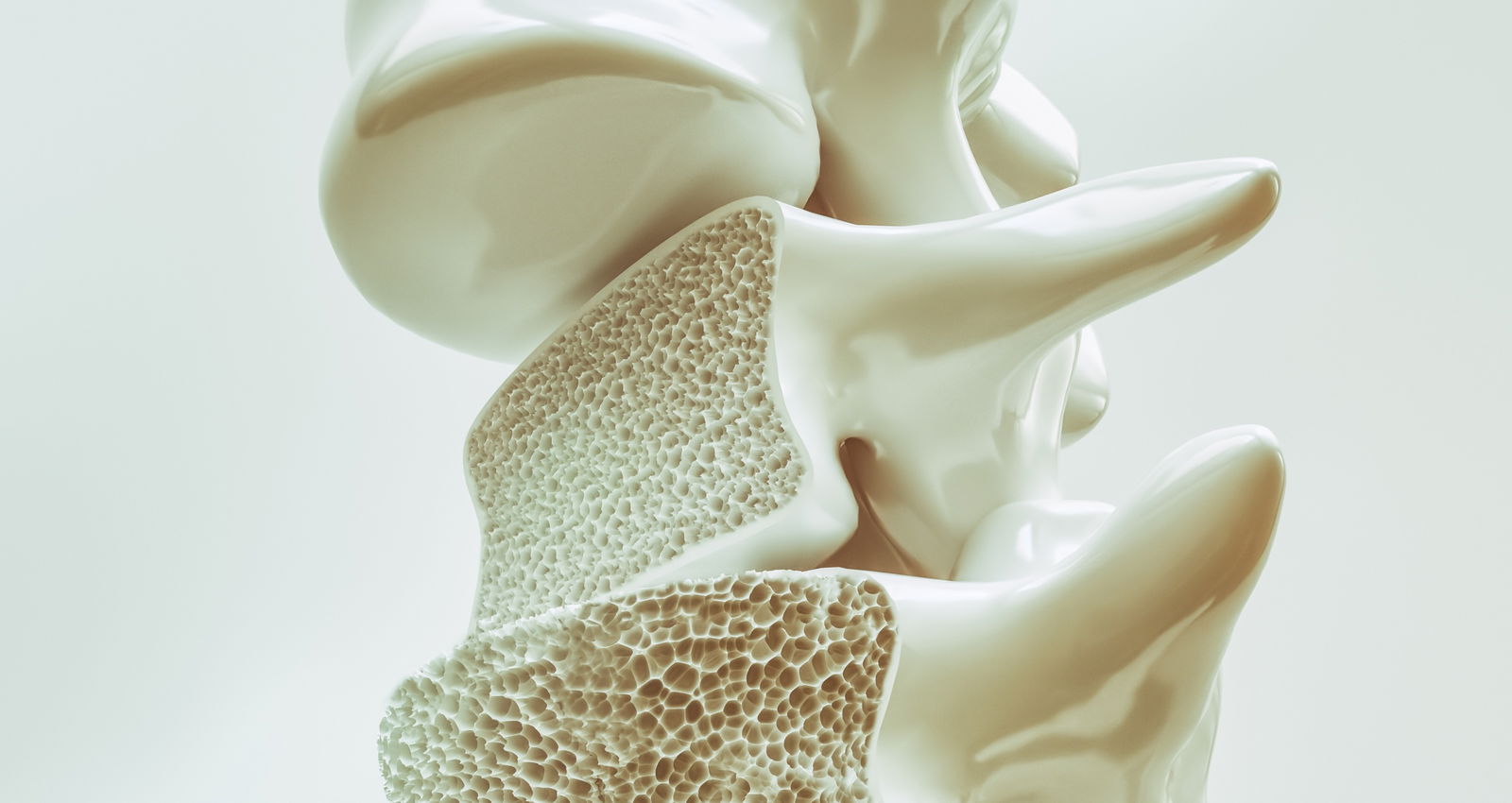 By integrating an evidence-backed supplementation strategy, you can offer personalized, proactive care to those patients facing osteopenia, osteoporosis or seeking preventive strategies.
Bone health is often overlooked until a problem occurs indicating the bone structure is weakened. The importance of bone health touches on many aspects of physiological function, including bone marrow production of white blood cells, red blood cells, platelets and stromal cells, leading some experts to call bone marrow a “blood cell factory.” Protecting the bones yields far-reaching benefits. But for the purpose of this discussion, we will focus on loss of bone strength and density.
Bone is living tissue that is constantly being broken down and replaced. Osteoporosis occurs when the creation of new bone doesn’t keep up with the loss of old bone. Osteoporosis is on the rise, with an incidence of 9.4% in 2007-2008 increasing to 12.6% in 2017-2018 in men and women over age 50. However, the incidence for women is higher, at 19.6%.
According to an analysis in American Family Physician, osteoporosis rates are expected to climb for women and men to 13.6% by 2030. And while many experts blame this increase on an aging population with longer lifespans than previous, others argue changes in the American diet, reduced exposure to sunshine and inactive lifestyles are playing a significant role.
Two compounds commonly mentioned for bone building are calcium and vitamin D. A meta-analysis found calcium or vitamin D supplementation alone did not decrease the risk of hip fracture. However, the combination of these two nutrients showed a 19% reduction in hip fracture. Calcium does not work in isolation and when given on its own is associated with an increase in cardiovascular risk. A meta-analysis found higher calcium intake (without other vitamins/minerals) was associated with an increased risk of heart attacks and stroke. In fact, 361 myocardial infarctions (MI), strokes (CVA) or sudden deaths occurred in people taking calcium compared with 287 in people taking a placebo.
One theory is unescorted calcium can end up as intravascular calcifications that contribute to atherosclerotic changes. Using calcium in conjunction with vitamin D yields somewhat better results, but more can be done to improve bone strength than overfocusing on calcium alone.
Silica
Silica (silicon) is an essential mineral for bone formation and collagen production. Silica fosters an activity in the bone matrix that allows for better calcium deposition. An analysis reported silica form varies by food. For example, bananas are high in silica, but highly polymerized and poorly absorbed, whereas silica from whole grains is much better absorbed. Therefore, the size of the silica molecule and other dietary cofactors play an important role in silica utilization.
Silica can be extracted from plants or created synthetically for supplementation. One problem with plant extraction is that the richest source, Equisetum arvense (horsetail), also contains harsh crystals and an enzyme called thiaminase that can deplete the body’s stores of thiamin. Bamboo, another rich source, contains silica of very high molecular size with very little absorption.
French researchers developed a method of extracting silica from horsetail, keeping the flavonoids intact while removing the harsh crystals and thiaminase. They then added vitamin D and a small amount of marine minerals for better absorption and bone matrix activity. One study of this form of silica found supplementation increased calcium absorption into the bone by 50%, and various case studies have shown that using this form of silica can maintain and improve bone density even with osteoporotic bone changes.,,,
Strontium
Strontium has been shown to have powerful benefits for bone density. It both inhibits bone resorption and boosts bone formation. Strontium shares several chemical properties with calcium, so they should not be administered at the same time as they will compete for absorption. A few hours between doses is usually adequate.
Though supplemental forms of strontium have been used medically since the early 1900s, it is not as well-known in the US as it is in Europe for osteopenia and osteoporosis applications. Some confuse it with manmade strontium 90, the radioactive isotope form released during nuclear fission. Mineral strontium has a long record of safety and is not radioactive.
Researchers at the Mayo Clinic noted significant improvement in severe osteoporosis with strontium lactate. The results were verified by both clinical examination and X-ray. Other studies have shown significant microscopic improvement in bone density with the use of strontium carbonate. Strontium citrate is another form of the mineral easily utilized by the body.
The results of a randomized, double-blind, placebo-controlled study lasting three years examined the use of 2,000 mg of strontium daily. The results found women with osteoporosis experienced a 41% reduction in risk of a vertebral fracture compared to the placebo group. Overall vertebrae density in the strontium group increased 6.8% but there was a 1.3% decrease in the placebo group. Additionally, clinical work has found strontium can help those with knee osteoarthritis as well.,,,
Vitamin K2 menaquinone 7
Vitamin K is not a single entity; it is a family of compounds including phylloquinone (vitamin K1) and a group of menaquinones (vitamin K2) further designated as MK-4 through MK-13. The numbers are based on chemical side chain lengths. MK-4, MK-7 and MK-9 are the most well-studied menaquinones.
Menaquinone 7 is of particular interest for building bones. Bone is a living system in the body, not merely the scaffolding that supports structure. The skeleton is constantly remodeling and releasing calcium into the bloodstream. Therefore, bone can change size and shape as it grows or repairs itself from injuries. This remodeling is regulated by cells called osteoblasts (which build bone) and osteoclasts (which break down bone). As long as bone-building and bone-resorption are perfectly balanced, the process of maintaining healthy bone structure is maintained.
One function of osteoblasts is to produce osteocalcin, an important compound in binding calcium to the skeletal matrix. Osteocalcin, in turn, boosts bone mineralization through its ability to bind to hydroxyapatite, which in turn makes bones stronger and less susceptible to fracture. However, the newly made osteocalcin is inactive, and it needs vitamin K2 to become fully activated to bind calcium.,
The vitamin K form menaquinone 7 (MK-7) increases bone mineral density and promotes bone quality and strength.
In a three-year study, postmenopausal women received either placebo or MK-7. Bone mineral density of the lumbar spine, total hip and femoral neck was measured by DXA; bone strength indices of the femoral neck were also calculated. Vertebral fracture assessment was performed by DXA and used as measure for vertebral fractures. Other baseline and annual measurements evaluated circulating uncarboxylated osteocalcin and carboxylated OC. This ratio served as a marker of vitamin K status.
The results of the study showed MK-7 intake significantly improved vitamin K status and decreased the age-related decline in bone mineral content and bone mineral density at the lumbar spine and femoral neck, but not at the total hip. Bone strength was also favorably affected by MK-7. MK-7 significantly decreased the loss in vertebral height of the lower thoracic region at the mid-site of the vertebrae.
Final thoughts
While calcium and vitamin D remain foundational to bone health, the evolving landscape of nutritional science reveals they are far from the whole story. And by embracing a broader, evidence-based approach to supplementation, you are uniquely positioned to offer more personalized, proactive care and a holistic approach to musculoskeletal wellness.
Cheryl Myers, RN, is an author, healthcare practitioner and expert on integrative health and natural medicine. She is a nationally-recognized speaker who has been interviewed by the New York Times, Wall Street Journal and Prevention Magazine. Her articles have been published in Aesthetic Surgery Journal and Nutrition in Complementary Care, and her research on botanicals has been presented at the American College of Obstetrics and Gynecology and the North American Menopause Society. She is a well-known advocate for bridging the worlds of mainstream and natural medicine. A graduate of Purdue University, Myers has been clinically certified in oncology and gerontology, has an additional degree in psychology focusing on physiological brain function and is the Chief of Scientific Affairs and Education for EuroPharma Inc.


