An overview of advanced therapies and expert care

I have observed the significant impact of tendinopathies on my athletes’ performance during my 30-year career. A 2025 cross-sectional study highlighted that 30.6% of high-performance athletes had a confirmed diagnosis of tendinopathy.1 Patellar tendinopathy, known as “jumper’s knee,” is among the most common conditions, with a prevalence of 18.3%.2 Tendinopathies affect various tendons throughout the body, impacting athletes across multiple sports.3 A comprehensive, evidence-based approach is essential for successful tendinopathy treatment. It shifts focus from treating symptoms to addressing underlying factors causing tendon dysfunction. Chiropractic care and effective physical therapy play a significant role in this process, promoting tissue healing, reducing stress on tendons and restoring biomechanics.
Understanding tendinopathy
Pathophysiology
Understanding of tendinopathy has improved significantly. The outdated term “tendinitis” suggested inflammation; however, studies reveal a more complex scenario. Tendinopathy is now seen as a condition of tendon overload, causing neovascularization and collagen disarray. This overload leads to microtrauma and a compromised healing response with weaker collagen types and abnormal blood vessel growth.
Pathological changes in the tendon may involve tenocyte proliferation, thickening, neovascularity, collagen fibril thinning, increased non-collagenic and fibrocartilage matrix, fat deposition, altered fluid movement and overproduction of nitric acid with tissue apoptosis.4,5,6 The tendon’s mechanical properties are compromised, leading to reduced stiffness and strength, ineffective force transfer and impacts on central nervous system motor control.7,8,9 Inflammation and degeneration often coexist during this process.8,9,10
Treatments for tendinopathy in athletes
In my practice, I integrate a variety of advanced treatment techniques to address tendinopathy, in addition to traditional chiropractic care.
Manipulation and mobilization
Manipulations crucially restore joint mechanics and reduce tendon stress. Addressing biomechanical imbalances in the spine and extremities helps optimize movement patterns and reduces strain on tendons. For example, a restricted ankle joint can lead to Achilles tendinopathy. Restoring proper ankle motion through adjustments alleviates stress on the Achilles tendon and promotes healing.11
Dry needling
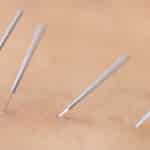
Dry needling (DN) is a technique that involves inserting thin, sterile needles into or around the affected tendon, muscles and surrounding tissues. It’s thought to disrupt the chronic degenerative process and encourage localized healing.12,13 While myofascial trigger points may play a role, the mechanism responsible for DN-mediated analgesia may be more complex.14
The proposed mechanisms of action include:
Peripheral effects
- Increased blood flow: DN can increase blood flow and oxygenation to the treated area.
- Modulation of inflammatory mediators: DN may decrease inflammatory cytokines and other pain-related chemicals.
- Mechanotransduction: Mechanical stimulation from DNcan stimulate fibroblasts and promote collagen remodeling.
Spinal effects
- Gate control theory: DN may activate Aß fibers, leading to segmental inhibition of pain signals in the spinal cord.
- Descending pain modulation: DN may activate the descending pain modulatory system, involving opioids, serotonin and norepinephrine.
Supraspinal effects
DN may stimulate the nucleus accumbens, resulting in opioid release.
For example, in treating lateral epicondylitis, DN may be used to address the forearm muscles, such as the extensor carpi radialis brevis, as well as the nervous structures in the area.15
Photobiomodulation for tendon healing
Photobiomodulation (PBM), or low-level laser therapy (LLLT), uses specific light wavelengths to promote tissue repair and relieve pain in tendinopathies. Mechanisms include:16
- Stimulating collagen synthesis: LLLT may enhance fibroblast proliferation and collagen production crucial for tendon repair.
- Reducing inflammation: LLLT has anti-inflammatory and analgesic effects in the injured area.
- Improving blood flow: LLLT promotes angiogenesis, potentially improving nutrient and oxygen circulation to the tendon.17,18
Laser therapy can be applied to the affected tendon and surrounding tissues to treat conditions, such as patellar tendinopathy. During laser therapy sessions, it’s crucial to use appropriate safety measures, including eye protection for both practitioner and athlete.
Stecco’s fascial manipulation
Stecco’s fascial manipulation therapy targets fascial restrictions causing altered biomechanics and pain. The fascia is connective tissue surrounding muscles, tendons and organs. Restrictions can limit movement and lead to pain.19,20 Fascial manipulation identifies specific centers of coordination (CCs) and centers of fusion (CFs) related to the affected tendon. CCs coordinate movement, while CFs are where fascial layers converge. Applying manual techniques at these points can release fascial restrictions and restore biomechanics. A thorough assessment is crucial before applying fascial manipulation to ensure the correct areas are addressed.21
Rehabilitation and exercise prescription
Effective tendinopathy management relies on targeted rehabilitation and exercise prescription, aiming to apply loads to the tendon for healing and function restoration.22,23 Key principles include:
- Progressive loading: Gradually increasing tendon load over time for adaptation and injury risk reduction.
- Eccentric exercises: Focusing on muscle lengthening, shown to promote tendon healing.
- Guidelines support mechanical loading, such as eccentric exercises or heavy-load programs, especially for midportion Achilles tendinopathy, if no structural frailty is present. Patients should engage in exercise at least twice weekly for symptom management and functional enhancement.
Final thoughts
Managing tendinopathy in athletes is complex and requires a personalized approach. Effective treatment goes beyond symptom relief; it involves understanding the underlying pathophysiology, assessing biomechanical factors and applying evidence-based interventions strategically.
Traditional care, including rehabilitative exercises, forms a crucial foundation, while advanced therapies, such as dry needling, low-level laser therapy and fascial manipulation optimize treatment outcomes. Dry needling modulates pain pathways and promotes tissue healing, aiding in myofascial issues of tendinopathy. Superpulsed laser therapy accelerates tendon repair with its effects on collagen synthesis and inflammation. Fascial manipulation addresses fascial restrictions, restoring biomechanical balance and optimizing structural integrity.
Clinical decision-making should be guided by critically appraising the evidence and carefully considering the individual athlete’s situation presentation. Collaboration among athletes, coaches/parents and healthcare professionals is the most effective way to manage tendinopathy. I encourage athletes, trainers and healthcare providers to consult qualified DCs or physical therapists with the expertise to implement these strategies.
Brian V. Hortz, PHD, ATC, SFDN, is director of research and education at Structure and Function Education. For more information, email brian@structureandfunction.net or visit structureandfunction.net.
References
- Lopes LR, et al. Implications of tendinopathy on the sports career: Epidemiological and clinical profile of high-performance athletes. Phys Ther Sport. 2025;72:59-68. https://pubmed.ncbi.nlm.nih.gov/39951859/. Accessed June 5, 2025.
- Nutarelli S, et al. Epidemiology of patellar tendinopathy in athletes and the general population: A systematic review and meta-analysis. Orthop J Sports Med. 2023;11(6):23259671231173659. https://pubmed.ncbi.nlm.nih.gov/37347023/. Accessed June 5, 2025.
- Scott A, et al. Sports and exercise-related tendinopathies: A review of selected topical issues by participants of the second International Scientific Tendinopathy Symposium (ISTS) Vancouver 2012. Br J Sports Med. 2013;47(9):536-544. https://pubmed.ncbi.nlm.nih.gov/23584762/. Accessed June 5, 2025.
Pearce CJ, et al. Is apoptosis the cause of noninsertional Achilles tendinopathy? Am J Sports Med. 2009;37(12):2440-2444. https://pubmed.ncbi.nlm.nih.gov/19741110/. Accessed June 5, 2025.
Nuri L, et al. The tendinopathic Achilles tendon does not remain iso-volumetric upon repeated loading: Insights from 3D ultrasound. J Exp Biol. 2017;220(17):3053-3061. https://europepmc.org/article/MED/28620014/. Accessed June 5, 2025.
Kragsnaes MS, et al. Stereological quantification of immune-competent cells in baseline biopsy specimens from Achilles tendons: Results from patients with chronic tendinopathy followed for more than four years. Am J Sports Med. 2014;42(10):2435-2445. https://pubmed.ncbi.nlm.nih.gov/25081311/. Accessed June 5, 2025.
Jewson JL, et al. The sympathetic nervous system and tendinopathy: A systematic review. Sports Med. 2015;45(6):727-743. https://pubmed.ncbi.nlm.nih.gov/25655371/. Accessed June 5, 2025.
Pingel J, et al. Local biochemical and morphological differences in human Achilles tendinopathy: A case control study. BMC Musculoskelet Disord. 2012;13(1):53. https://pubmed.ncbi.nlm.nih.gov/22480275/. Accessed June 5, 2025.
Chang YJ, Kulig K. The neuromechanical adaptations to Achilles tendinosis. J Physiol. 2015;593:3373-3387. https://pubmed.ncbi.nlm.nih.gov/26046962/. Accessed June 5, 2025.
Pingel J, et al. Inflammatory and metabolic alterations of Kager’s fat pad in chronic Achilles tendinopathy. PLoS One. 2015;10(5):e0127811. https://pubmed.ncbi.nlm.nih.gov/25996876/. Accessed June 5, 2025.
Pfefer MT, et al. Chiropractic management of tendinopathy: A literature synthesis. J Manipulative Physiol Ther. 2009;32(1):41-52. https://pubmed.ncbi.nlm.nih.gov/19121463/. Accessed June 5, 2025.
Stoychev V, et al. Dry needling as a treatment modality for tendinopathy: A narrative review. Curr Rev Musculoskelet Med. 2020;13(1):1-7. https://pubmed.ncbi.nlm.nih.gov/31942676/. Accessed June 5, 2025.
Cagnie B, et al. Physiologic effects of dry needling. Curr Pain Headache Rep. 2013;17,348. https://doi.org/10.1007/s11916-013-0348-5/. Accessed June 5, 2025.
Butts R, Dunning J. Peripheral and spinal mechanisms of pain and dry needling mediated analgesia: A clinical resource guide for healthcare professionals. Int J Phys Med Rehabil. 2016;4(2). https://doi.org/10.4172/2329-9096.1000327/. Accessed June 5, 2025.
Hortz BV, Falsone S. Treating lateral epicondylopathy with dry needling and exercise: A case series. J Sport Rehabil. 2024;33(4):301–306. https://doi.org/10.1123/jsr.2023-0015/. Accessed June 5, 2025.
Alzyoud JAM, et al. Photobiomodulation for tendinopathy: A review of preclinical studies. Photobiomodul Photomed Laser Surg. 2022;40(6):370-377. https://pubmed.ncbi.nlm.nih.gov/35639100/. Accessed June 5, 2025.
Martimbianco ALC, et al. Photobiomodulation with low-level laser therapy for treating Achilles tendinopathy: A systematic review and meta-analysis. Clin Rehabil. 2020;34(6):713-722. https://pubmed.ncbi.nlm.nih.gov/32204620/. Accessed June 5, 2025.
Tumilty S, et al. Photobiomodulation and eccentric exercise for Achilles tendinopathy: A randomized controlled trial. Lasers Med Sci. 2016;31:127-135. https://pubmed.ncbi.nlm.nih.gov/26610637/. Accessed June 5, 2025.
Stecco C, Stecco A. Fascial manipulation. In Fascia: The Tensional Network of the Human Body. Elsevier. 2012:335–342. https://doi.org/10.1016/B978-0-7020-3425-1.00007-6/. Accessed June 5, 2025.
Stecco C, Day JA. The fascial manipulation technique and its biomechanical model: A guide to the human fascial system. IJTMB. 2010;3(1):38–40. https://pubmed.ncbi.nlm.nih.gov/21589701/ . Accessed June 5, 2025.
Stecco C, et al. Plantar fascia anatomy and its relationship with Achilles tendon and paratenon. J Anat. 2013;223(6):665–676. https://doi.org/10.1111/joa.12111/. Accessed June 5, 2025.
Morrissey D. Guidelines and pathways for clinical practice in tendinopathy: Their role and development. J Orthop Sports Phys Ther. 2015;45(11):819-822. https://pubmed.ncbi.nlm.nih.gov/27136286/. Accessed June 5, 2025.
Vicenzino B. Tendinopathy: Evidence-informed physical therapy clinical reasoning. J Orthop Sports Phys Ther. 2015;45(11):816-818. https://pubmed.ncbi.nlm.nih.gov/27136285/. Accessed June 5, 2025.