
By Anthony J. Lombardi, DC
The motor point in muscle is the junction where the motor nerve innervates the skeletal muscle. It’s the end point of all motor neural processes which culminates in the desired contraction of skeletal muscle. Many practitioners who use functional motor point acupuncture are not aware of the main factors which influence muscles to become inhibited. Learning the three most popular factors that influence this clinical phenomenon will improve clinical results.
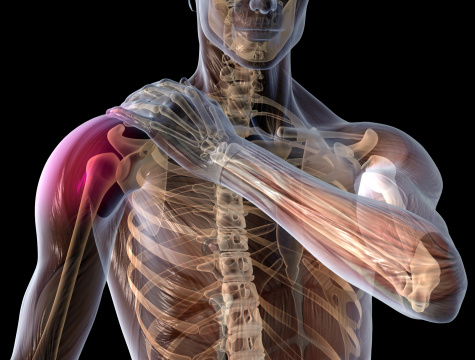 Nociception, Pain, and Joint Changes
Nijs (2012) describes nociception as the processing of noxious stimuli by the peripheral sensory system which can adversely affect the motor neuron, causing a weaker muscle contraction. Nijs determined that chronic, nociceptive stimuli result in cortical delay of the motor output and a reduced activity of the pained muscle, as well as the fact that nociception-induced motor inhibition might prevent effective motor retraining.
Lund (1999) described a lack of sensorimotor integration or “dysfunction” that occurs between the agonist and antagonist during musculoskeletal pain. This adaptation was also observed by Svennson (1996), where he concluded the observed sensory-motor interactions can be explained by a neuronal reflex whereby neural drive is decreased via reciprocal inhibition, which prevents the maximal firing in the region of injury.
And lastly, changes in spinal and peripheral joints can also cause motor inhibition. This phenomenon (Hurley 1997) has been attributed to neuronal reflex activity in which altered, afferent input from the arthritic joint results in diminished efferent motor drive to muscles that support that joint. Horre (2006) concluded this is from changes in joint structures (osteoarthritis) in which nociception is projected via interneurons onto alpha motoneurons in the spinal cord, which trigger peripheral muscle inhibition.
Restoring Motor Inhibition
The work of several researchers (Staud 2006, Hong, 2002, Gunn, 1980, Lewit 1979) has built the foundation for the growing use of Functional Motor Point Acupuncture to restore motor inhibition. Gribble (2005) concluded that muscle groups in the proximal skeletal girdle of the kinetic chain were associated with strength deficits from distal joint injuries, and Bullock-Saxton (1994) noted the influence of distal joint injury on muscle activation of proximal muscles of the pelvic girdle. For example, you can have a patient with low back pain who has an inhibited gluteus maximus muscle brought on by an old ankle sprain or a jammed wrist, which causes inhibition of the scapular girdle. In this case, locating and stimulating the neuromuscular junction or “motor point” of the inhibited tissue will help restore dysfunction. This dysfunction can be restored by using an acupuncture needle directly on the motor point with or without the use of electricity.
For questions about motor point acupuncture, please email Dr. Lombardi exstore@usa.com or via www.acupuncturemotorpoints.com


