


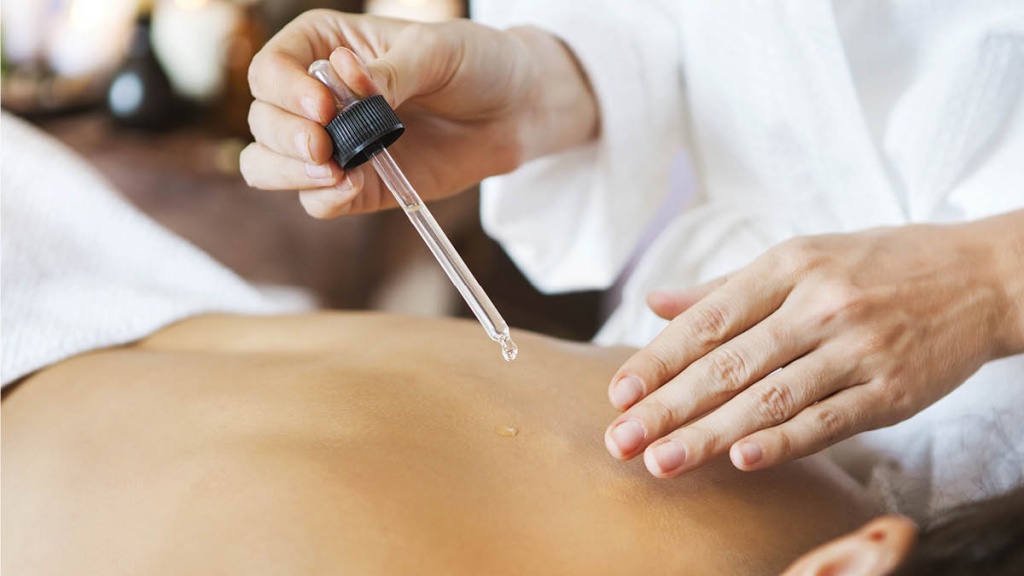
CBD is not only in the product, but also the application
MANY PRACTITIONERS ARE MOST INTERESTED IN CBD topicals for joint pain — salves, serums, creams, lotions, oils, sprays, liniments and patches on the market that they can legally recommend to patients.
Legal products for chiropractors (for the time being) are products that contain hemp-derived cannabidiol (CBD). Hemp-derived CBD by law can only contain a minuscule amount of THC — no more than 0.3%. The number one thing to look for in a cannabis topical is to make sure it is legal to dispense to patients.
Terms and definitions
When it comes to terms and products, doctors of chiropractic need to understand what they are getting — hemp is hemp, and marijuana is marijuana:

- CBD is a phytocannabinoid;
- CBD is found in the flower, seeds and stalk;
- Full spectrum is from the whole (full) plant;
- Isolate is pure CBD. The terpenes, non-CBD cannabinoids like THC, chlorophyll and organic matter are removed. It has no taste or smell;
- Distillate — CBD distillates are not as pure as a CBD isolate. A CBD distillate contains different cannabinoids, terpenes and plant materials;
- Hemp oil is a carrier or base made from the seed and/or stalk only. It has virtually no CBD; it contains omega 3 and 6;
- Hemp extract is usually a code word for CBD (ex. 28 mg per 1-ml serving);
- CBDA, CBDV, etc. — If you see additional letters with CBD it is likely a cannabinoid, but you won’t know how much is CBD unless it was tested.
THC-free
Hemp cannabidiol (CBD) products are legal everywhere in the U.S.; as long as the CBD comes from hemp, it is legal. The confusion comes from the fact that hemp is a cannabis plant and marijuana is a cannabis plant. Hemp is a cannabis plant that contains less than 0.3% THC. As long as the CBD product stays below 0.3 percent THC, there’s no chance of any psycho-active effects.
Some products are being sold to chiropractors that contain marijuana-derived CBD, which contain much more — up to 25% in dried marijuana buds (THC). The low amount of THC is extremely important when looking for a CBD supplier for two reasons:
1) This low amount (0.3%) of THC CBD is what makes CBD products legal, and;
2) When CBD isn’t extracted from hemp but rather marijuana, it can contain higher levels of THC.
The take-home message: Higher amounts than 0.3% THC could potentially get you in trouble with the law.
Manufacturing and product quality
Contamination can occur anywhere along the manufacturing process, from the growing process to the extraction process to the bottling process to the delivery process.
It’s a good idea to ask if the company has testing standards. A medical-grade CBD manufacturer and supplier will test for contaminants. These are the top things they should be testing for in their hemp:
- Heavy metal contaminants: tests for arsenic, cadmium, mercury and lead. All these heavy metals have long been known to cause lasting health problems, especially when they are vaporized or smoked.
- Microbiological contaminants: tests for yeast and different kinds of mold. Some forms of mold are not harmful to humans, but testing for mold helps ensure that the hemp is of the highest quality and grown with care.
- Pathogenic contaminants: Bacterial testing is used to test for things like E. coli and salmonella. These bacteria can cause gastrointestinal issues and can be contagious. Normally, these types of bacteria only appear in hemp plants that were grown and stored in a dirty environment.
- Pesticide contaminants: one of the most commonly-used contaminants in the production of hemp. While some pesticides, like Spinosad, are used on humans to help with problems like head lice, other pesticides, like daminozide, have been proven toxic to humans and are only allowed to be used for growing ornamental plants or anything that’s not going to be consumed by humans or animals.
Because hemp is grown for more than just CBD production (i.e. textiles and wares), there are plenty of companies out there that grow their hemp with all sorts of chemicals and contaminants. However, you don’t want to use that same hemp to create CBD products for human application or consumption.
Quality testing and manufacturing
When one looks for quality CBD suppliers, investigate where they send samples to be tested, and look for lab results. This is called a Certificate of Analysis (COA). It’s a good idea to make sure patients can see the results, too.
When extracting CBD for a topical that’s going to be applied to the skin, it’s always best to use medical-grade CBD and organic materials.
The label should inform you about the directions for use and any warnings. We also want to know if there are specific risks.


Dosing and data
Few CBD topical companies have made a deliberate effort to prove skin permeation at the site of pain.
One prominent company designed a formulation with dosing instructions for its product designed in order to maintain a consistent concentration over a specific period of time (see graph). This formula results in a deeper penetration to target the painful area. I have found this improves therapeutic outcomes and enhances patient compliance.
The testing was of skin permeation, called a Diffusion Study. They found that skin retention is consistent, and that if applied multiple times at the beginning of use the topical will result in a “lag effect” that improves permeation significantly within the first 24 hours.
Dose recommendations are application, then repeated application an hour later, then repeat for a total of four applications an hour apart. Continue to apply the topical 3-4 times per day as needed. Continuous applications have been demonstrated to improve results and provide maximum CBD delivery.
Multiple early applications result in consistent retention and a “lag effect” that significantly improves CBD permeation at the target site, and is seen within the first 24 hours of use.
Measure dosage
Hemp-derived CBD products come in many varieties of container, i.e. bottles, jars, etc. Consider a container with a pump to allow you to look at the milligrams included in the dose. The milligrams of CBD are what counts. Rub it in to about the size of a deck of cards; using a pump will make it easy to dose.
Chiropractors need to stay knowledgeable to keep up with CBD sales reps and settle on the best products and applications for CBD topicals for joint pain and other ailments — and patients’ well-being.
JEFFREY TUCKER, DC, DACRB, is an expert in the field of posture, muscle and joint therapy, pain management, and nutrition. He is the current president of the ACA Rehab Council (CCPTR.org). He is also a world-renowned speaker and author of more than 100 articles on subjects of his expertise. His website is DrJeffreyTucker.com.