

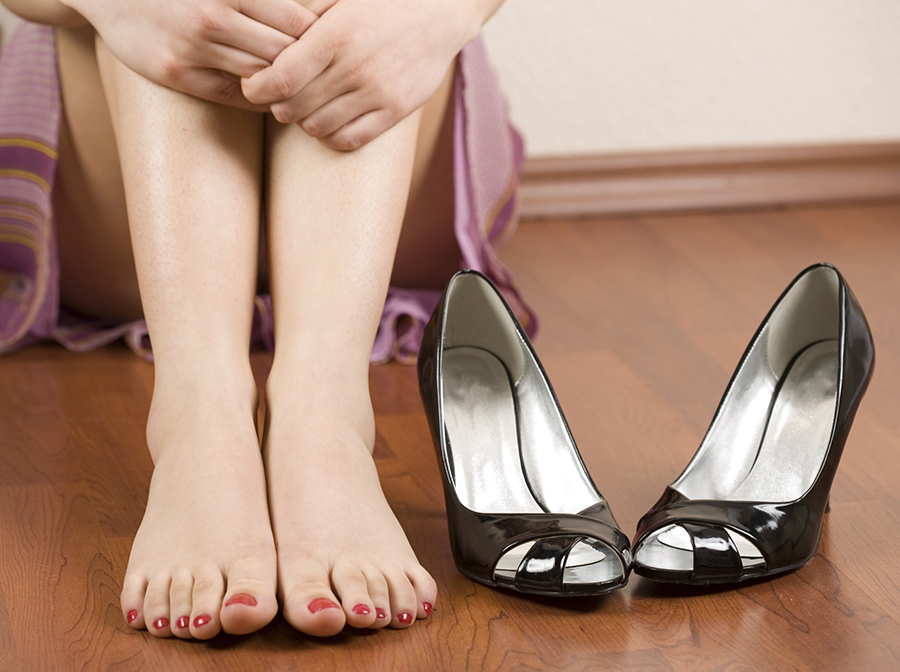

Wearing high heels can make you feel taller, glamorous, and fashionable. But are these benefits worth the painful consequences?
High-heeled shoes affect your body’s center of gravity and change your body’s alignment—negatively impacting back support and posture. Heels can also cause foot problems or worsen existing conditions.
When you wear high heels, you put your feet in a downward position, which places additional pressure on your forefoot. You need to adjust the rest of your body to compensate and maintain balance. The lower part of the body leans forward, while the upper body must lean back. This is not the body’s normal standing position, and poor alignment can result in muscle overuse and back pain.
High-heeled shoes can also cause your foot and ankle to turn in an outward position, putting you at risk for losing your balance and spraining your ankles. This change in position puts pressure on the back of the heel. If it affects the line of pull of the achilles tendon, it can cause a deformity called pump bump (Haglund’s deformity).

But that’s not all
Heard enough? Well, there are even more reasons to leave the heels at home or, better yet, at the shoe store. Your back’s normal s-curve acts as a shock absorber, reducing stress on the vertebrae. Wearing heels causes low-back spine flattening and a backward displacement of the head and spine.
In addition, the hip flexor muscles (in the upper front part of your thighs) have to work much longer and harder to help you walk due to the downward position of your feet. If you habitually overuse hip flexor muscles, the muscles can get shorter and a contracture can occur. This can also cause your spine to flatten.
Because heeled footwear increases the distance between the floor and knee, you’re more prone to increased knee torque—which can lead to osteoarthritis.
The higher the heel, the more pressure put on the bottom of the forefoot, which can lead to foot pain or deformities such as bunions, hammer toes, and neuromas.
If the shoe fits
Some other things to keep in mind when buying footwear include:
- Don’t wear shoes that are pointy or very narrow in the front. You will be more apt to get bunions and neuromas.
- Avoid open back or slide-on shoes that require toe gripping. This can result in hammer toes and foot tension.
- While the ideal height is no heel, a two-inch heel will cause less pain or damage than higher ones.
The bottom line is, wearing flat shoes, such as sneakers or sandals, is a much better choice for your posture, as well as your back, hips, knees, and feet.
Karen Appold is a writer in Lehigh Valley, PA.


