Cannabidiol (CBD) has moved from the fringes of wellness into mainstream patient conversations.
Your patients are hearing about it on podcasts, seeing it on store shelves and asking questions during appointments. For healthcare professionals, the challenge is not whether the conversation will happen, but how to guide it with clarity, science and trust.
Your patients already have cannabinoids in their body
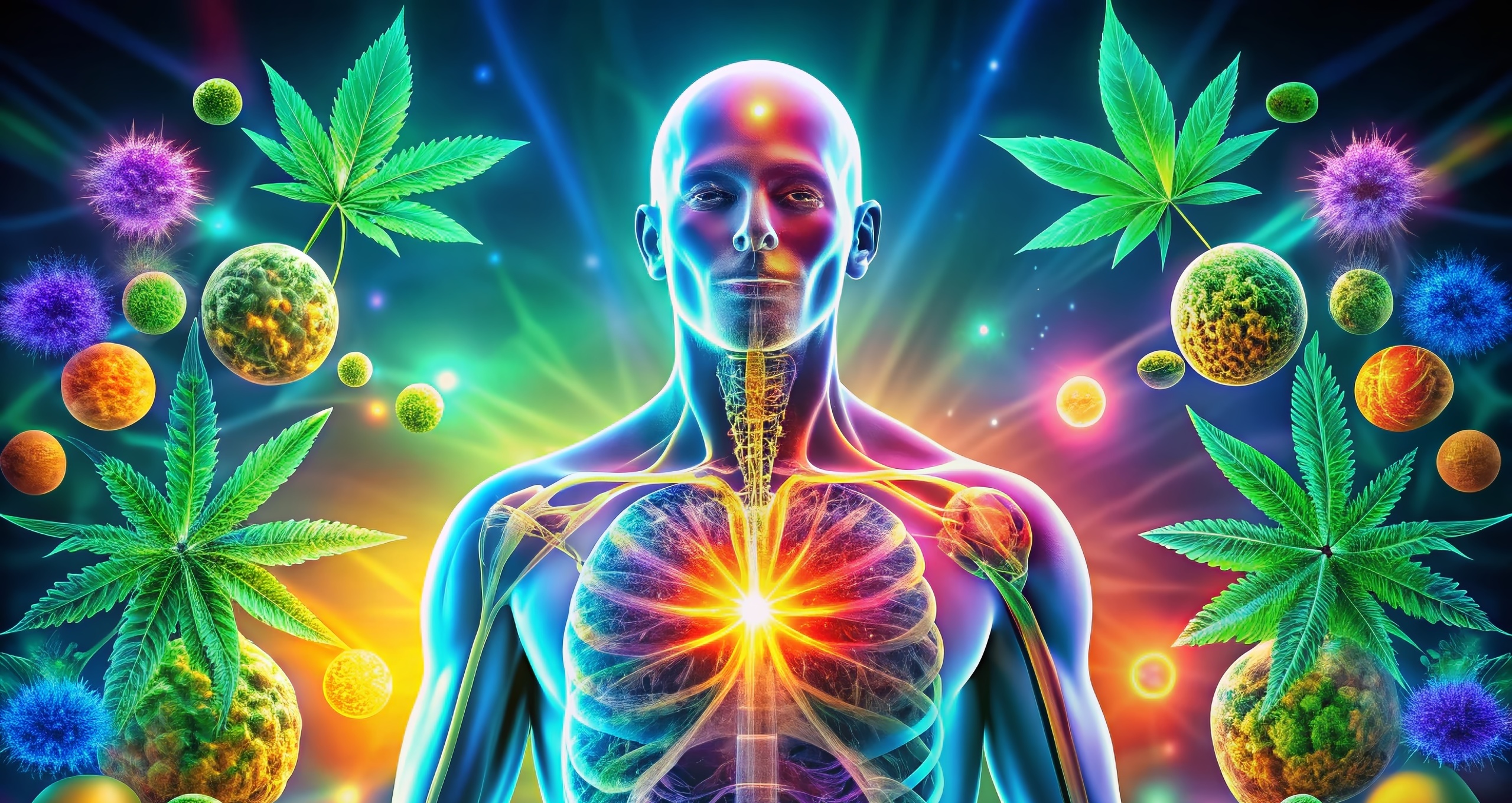
One of the most powerful ways to begin the CBD conversation is by reframing it as something familiar, not foreign. The human body contains a built-in regulatory network known as the endocannabinoid system (ECS). This system plays a critical role in maintaining homeostasis, helping regulate pain perception, inflammation, immune response, mood, sleep, appetite and stress response. The ECS consists of the following:1
- Endocannabinoids: Molecules your body naturally produces, such as anandamide and 2-AG
- Cannabinoid receptors: Primarily CB1 (concentrated in the central nervous system) and CB2 (primarily involved in immune and inflammatory regulation)
- Enzymes: Synthesize and break down endocannabinoids as needed
When patients understand that cannabinoids already exist within their own physiology, cannabidiol stops sounding like an “alternative drug” and starts sounding like nutritional or neurological support. CBD does not replace this system; it interacts with it, helping support balance when the system is under stress from injury, inflammation, aging or lifestyle factors.2

This foundation alone builds immediate credibility and lowers patient resistance.
CBD is proven to work
A common concern among patients is whether CBD is “real science” or simply wellness marketing. The answer lies in mechanism, not hype.
CBD has been extensively studied for how it interacts with the ECS and other signaling pathways. Unlike THC, CBD does not directly bind to CB1 receptors. Instead, it works more subtly and broadly by modulating receptor activity rather than overstimulating it. Examples include:
- Inhibiting enzymes, such as FAAH, that break down the body’s own endocannabinoids, allowing them to remain active longer3
- Influencing inflammatory pathways, including cytokine signaling4
- Interacting with serotonin (5-HT1A) receptors, which helps explain its effects on stress and mood regulation5
Through these pathways, CBD has been shown in peer-reviewed research to support the following:6
- Reduced inflammatory signaling
- Improved pain modulation
- Support for recovery from physical stress
- Improved sleep quality and stress resilience
This is why CBD is frequently discussed in relation to musculoskeletal discomfort, joint health, exercise recovery and nervous system balance. Importantly, these effects are regulatory, not suppressive; CBD helps the body respond more appropriately rather than forcing a pharmaceutical-style override.
When educating patients, emphasizing how CBD works, not making exaggerated promises, creates trust and aligns with evidence-based care.
CBD is not intoxicating and permitted for US Olympic athletes
One of the most persistent misconceptions is that CBD causes a “high.” This confusion comes from its association with cannabis, but pharmacologically, CBD and THC behave very differently.
CBD is non-intoxicating. It does not impair cognition, reaction time or motor coordination. Patients can use it without feeling altered or sedated when appropriately dosed.
THC, on the other hand:
- Directly stimulates CB1 receptors in the brain
- Crosses the blood-brain barrier
- Produces psychoactive effects, euphoria and impairment
CBD does not cross the blood-brain barrier in the same way and does not activate CB1 receptors to produce intoxication. This distinction is so well-recognized that CBD is permitted for use by Olympic athletes under guidelines from the United States Anti-Doping Agency. While THC remains prohibited in competition above specific thresholds, hemp-derived CBD with compliant THC levels is allowed. For patients, this provides powerful reassurance:
- CBD is not a drug that alters consciousness
- It does not cause addiction or impairment
- It can be used by high-performance athletes who are subject to strict testing
Framing CBD as supportive, not psychoactive, is essential for patient confidence.
Not all CBD is the same; testing is critical
Perhaps the most important and often overlooked part of patient education is guidance on how to determine product quality.
CBD is not a single standardized substance. Its safety and effectiveness depend entirely on how it is grown, extracted, formulated and tested. This is where many consumer products fall short. Key quality considerations include hemp source, extraction method and third-party testing.
Hemp source
Hemp is a bioaccumulator, meaning it absorbs substances from soil. If grown in contaminated environments, it can contain:
- Heavy metals
- Pesticides
- Mycotoxins
Extraction method
Low-quality extraction methods can leave behind residual solvents or damage delicate plant compounds. Clean, solvent-free or carefully controlled processes preserve cannabinoid integrity.
Third-party testing
Every reputable CBD product should provide:
- A certificate of analysis (COA) from an independent, accredited laboratory
- Verification of CBD and THC potency
- Screening for heavy metals, pesticides, mold and solvents
Without transparent testing, patients cannot know what they are ingesting or applying topically. This is where healthcare professionals add tremendous value. Patients may buy CBD online or at gas stations, but those products rarely meet clinical standards. Teaching patients to demand testing and traceability elevates the conversation from “trying CBD” to making an informed health decision.
Educating patients builds trust
CBD should never be positioned as a miracle cure or a replacement for medical care. Instead, it belongs in the same category as other evidence-supported wellness tools such as magnesium, omega-3s, exercise, sleep optimization and nutrition. Your job is to explain the biology behind CBD, set realistic expectations, emphasize quality and testing and clarify non-intoxicating use. The result is confidence on both sides of the conversation. Patients feel informed, not sold to.
Final thoughts
CBD is not about trends, but about understanding a system that already exists in the human body and using science-backed tools to support balance. When you lead with education and credibility, patients listen and trust follows.
Joe Kryszak, MBA, is president of Stirling Professional CBD. Stirling is committed to helping DCs help their patients. Since 2014, Stirling has grown, extracted and produced the purest CBD available and brings amazing, affordable CBD+ products to patients, with an industry-leading lineup of 2,500-mg CBD lotions, THC and THC-free capsules and gels and four great solutions for better sleep. For more information, email joe@stirlingprofessional.com or visit stirlingprofessional.com.
References
- Grinspoon P. The endocannabinoid system: Essential and mysterious. Harvard Medical School. August 2021. https://www.health.harvard.edu/blog/the-endocannabinoid-system-essential-and-mysterious-202108112569/. Accessed January 26, 2026
- Atalay S, et al. Antioxidative and anti-inflammatory properties of cannabidiol. Antioxidants (Basel). 2019;9(1):21. https://pmc.ncbi.nlm.nih.gov/articles/PMC7023045. Accessed January 26, 2026.
- Caroline MB, et al. Anxiolytic effects of endocannabinoid enhancing compounds: A systematic review and meta-analysis. Eur Neuropsychopharmacol. 2023;72:79-94. https://pubmed.ncbi.nlm.nih.gov/37094409/. Accessed January 26, 2026.
- Barakat M, et al. Cannabis and the immune response: A comprehensive review of therapeutic potential and concerns. Phytomed Plus. 2025;5(4):100876. https://www.sciencedirect.com/science/article/pii/S2667031325001472/. Accessed January 26, 2026.
- Resstel LB, et al. 5-HT1A receptors are involved in the cannabidiol-induced attenuation of behavioural and cardiovascular responses to acute restraint stress in rats. Br J Pharmacol. 2009;156(1):181-188. https://europepmc.org/article/PMC/2697769/. Accessed January 26, 2026.
- Leinen ZJ, et al. Therapeutic potential of cannabis: A comprehensive review of current and future applications. Biomedicines. 2023;11(10):2630. https://doi.org/10.3390/biomedicines11102630/. Accessed January 26, 2026.