


With only one in five Americans currently meeting the nation’s recommended physical activity guidelines, the Centers for Disease Control and Prevention has decided to put a nationwide initiative into action.
It’s called Active People, Healthy Nation and it’s designed to encourage 27 million adults and children in the U.S. to get up and get moving by the year 2027.
While this is good for the health of the nation as a whole,
as MedlinePlus shares, poor training practices, improper sports gear, and exercise-related
accidents can all result in exercise-related injuries. Among the most common are sprains, strains, knee injuries, injury to the rotator cuff, fractures, and dislocations.
Though some of these may require medical attention to effectively treat, there are many things active individuals can do at home to begin to feel better, as well as to speed up the healing process. This begins with assembling a home care rehab kit.
Compiling an effective home care rehab kit
The purpose of a home care kit is to “bring about blood flow and oxygen to chronic areas with scar tissue or to flush out blood flow to an acute and sore conditions from training or injury,” explains Marc Cesari, DC, CSCS, who works with Structural Elements, an orthopedic wellness clinic with locations in Maryland, Virginia, and Wisconsin. This helps ease both pain and inflammation in addition to assisting the recovery process.
Items that Cesari recommends be included in this type of kit
include:
- Hot and cold packs. “Sometimes you need ice to decrease a pain signal; sometimes you need heat for blood flow,” says Cesari. Therefore, it’s important to have both available for use, giving patients the ability to use the appropriate one for the type of injury or inflammation that exists.
- Muscle creams. Muscle creams provide a number of benefits. Among them are “to bring blood flow to a tight area or trigger point and relieve pain,” says Cesari. Research reveals that topicals containing ingredients such as nonsteroidal anti-inflammatory drugs, capsaicin, and menthol can help ease pain associated with acute and chronic injuries, as well as joint-related conditions like osteoarthritis.
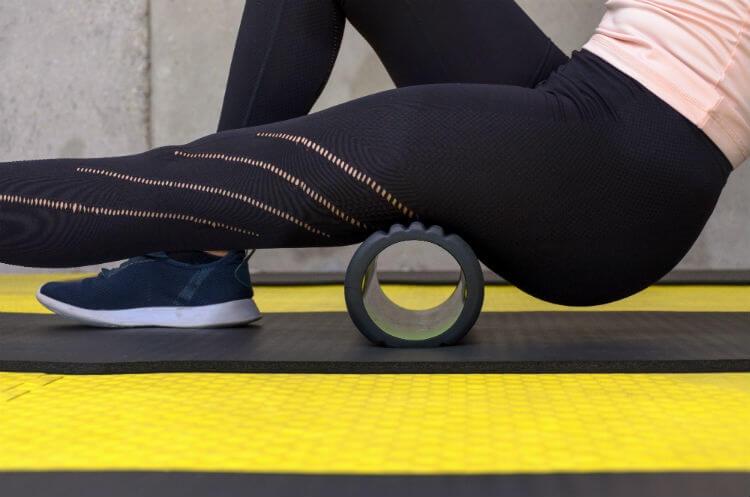
- Foam roller. Cesari calls foam rollers “the ultimate meat tenderizer” and states that they both increase blood to sore areas and aid in the treatment of delayed onset muscle soreness (DOMS). They don’t have to be expensive rollers either as Cesari indicates that “basic ones are just perfect.”
- Trigger point sticks and devices. If the goal is to increase blood flow to a trigger point or tight area, items designed to place pressure to that area can help achieve this goal. Even something as simple as a lacrosse ball works for this purpose says Cesari.
- Self-massage devices. Cesari also recommends having a self-massage device in a home care kit for cases when the trigger point is in “those hard to get to places.” Some of the most common come in the shape of a small shepherd’s hook, with nobs and nodules in various places so individuals can self-massage the impacted area.
There are a few additional items that can be added to create
a complete home care kit for active patients says Nicky Kirk, DC, Pg Dip, owner of The Recovery Doctor, a sports recovery company. Kirk is also an assistant professor at Parker University in Dallas, Texas and the former regional advisor to the Gatorade Sports Science Institute.
Among them are an assortment of resistance bands. Healthlinereports that resistance bands also aid in the prevention or reduction of soreness following grueling exercise sessions, serving as a recovery aid both with and without an actual injury.
Kirk also recommends that a home care kit include Epsom
salts and an instructional sheet explaining what foods and beverages can help via rehydration and refueling of the body. “I would also look at some type of educational information around sleep hygiene to aid recovery,” he says.
For the highly active patient
If you have patients who are extremely active, therefore may
benefit from having a home care kit that contains additional (and generally more expensive) recovery-based items, Cesari indicates that these three are worth considering:
- A percussor machine. “Percussive tools are another option to bring a vibrational-oscillation component to a trigger point or adhesions to bring fluid and blood flow to an area,” explains Cesari.
- Electric stim unit, or stim unit variation. These types of devices are “great for lymphatic drainage, decreasing muscle soreness, and helping with recovery,” says Cesari.
- Recovery boots. Cesari shares that the pneumatic sleeve of a recovery boot “helps ‘squeeze’ out lactic acid and by-product from sore muscles to assist in lymphatic drainage.”
When at-home treatment isn’t enough
It’s also important that patients know when to transition
from home care to medical care. “If you have an ailment for 10 to 14 days and it is not getting better, please seek professional help from a chiropractor, physical therapist, sports medicine specialist,” urges Cesari.
Making sure patients know this gives them access to all of
the information necessary to achieve a higher level of health, while also achieving a higher level of fitness.