
 By Brandi Schlossberg
Today’s chiropractic tables are a far cry from the more basic models used by the pioneers of this field. From hydraulic and electronic models, to decompression and traction tables, there are quite a few options to choose from when it comes to picking the best chiropractic table for you and your practice.
Perhaps the most important factor to consider as you search for the ideal chiropractic table is the type of chiropractic techniques you tend to apply on a regular basis. This should have a strong influence on the table model you select because many modern chiropractic tables are designed to assist and even enhance the hands-on work of the chiropractor.
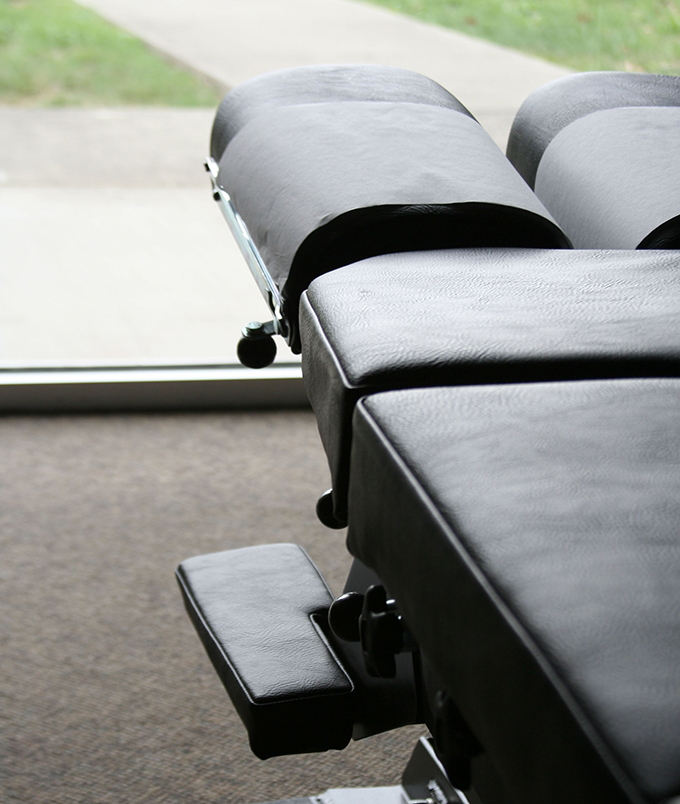
One great example is the drop table. A drop table adjustment can be a common and effective technique, and it relies not only on the manual skills of the chiropractor, but also on the design of the chiropractic table itself. These tables are designed so that specific segments “drop” slightly, allowing a bit more room for movement when the chiropractor delivers a thrusting adjustment.
A drop table adjustment technique depends on the design of the chiropractic table to deliver just the right amount of give in just the right places. Upon closer inspection, one sees that these sections do not drop below the surface of the overall chiropractic table. Instead, the drop segments typically are designed to be raised around three-quarters of an inch or so. Then, when the chiropractor delivers the adjustment, the patient’s body weight, along with the force of the thrust, drops the segment back into place.
One of the main benefits of a drop table adjustment, which is also known within the profession as the Thompson technique or a table assisted adjustment, is that the drop in elevation can assist the thrust and decrease the amount of force necessary for an effective adjustment.
So, for chiropractors who use or would like to use drop table adjustments within their practices, the purchase of a drop table is obviously necessary.
There are quite a few options when it comes to the kind of drop table one selects, however. The table may be equipped with manual, automatic or air drops, and the drop segments can be located in a variety of places.


